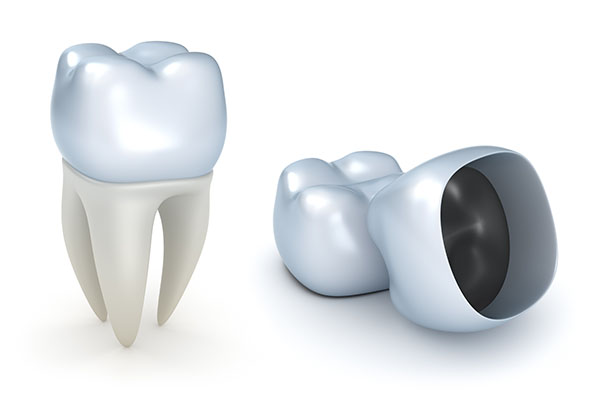
 A dental crown is a versatile restoration that can be used to address a wide range of dental issues like a cracked, chipped, decayed, deformed, or broken tooth. The crown covers up the part of the tooth that is visible above the gums, protecting it from further damage and acids made by oral bacteria.
Treating a cracked tooth with a dental crown
The severity of a crack that forms on a tooth determines how the dentist recommends treating it. The visible part of a person’s tooth has multiple layers, such as the outer chamber called the enamel and the innermost layer called the pulp chamber. The pulp chamber contains the nerves and blood vessels that supply the tooth with nutrients. The middle layer of a tooth’s crown is called the dentin and it makes up most of the tooth.
A crack that only affects the enamel and dentin is classified as mild to moderate. A dentist might be able to address it with more affordable treatments like composite bonding. A crack that reaches the pulp chamber typically needs root canal therapy and a crown.
The dental crown process
A cracked tooth never heals on its own, it only widens and deepens over time, causing more damage to the tooth’s structures. Covering a tooth prevents acids in the mouth from getting into the crack and expanding it. It also protects the tooth so it does not fall apart due to bite forces inflicted by chewing.
If the damage to the tooth reaches the pulp chamber, the dentist might recommend a root canal to clean out the soft tissues there. A crack leaving the pulp chamber open means bacteria in the mouth can now reach the soft tissues there and infect them. A root canal helps to protect against such issues and a crown is placed on the tooth afterward to preserve and restore it.
Local anesthetics are typically used during root canals to prevent the patient from feeling pain. A dental drill is used to make a hole into the pulp chamber and files are used to pull out the soft tissues. Medication is applied to the area before the dentist seals it with a material called gutta-percha.
Other options
Minor cracks can sometimes be fixed with composite bonding and cracks that extend below the gumline typically cannot be fixed with a crown. Dentists often recommend extracting cracked teeth when the damage reaches their root. The extracted tooth can be replaced with an oral prosthetic like an implant. In some cases, the dentist might be able to install the implant right after extracting the damaged tooth.
Do you have a cracked tooth?
A cracked tooth is often accompanied by symptoms like toothaches and increased sensitivity. Getting the appropriate treatments brings the pain to an end and restores the function of the tooth. Call or visit our Stockton clinic to set up an appointment to learn more about how a crown can address your cracked tooth.
Request an appointment or call Martin Dentistry at 209-299-7907 for an appointment in our Stockton office.
Related Posts
Choosing a dental crown involves balancing aesthetics, durability, and budget to ensure the long-term health of a damaged tooth. While it is natural to feel some hesitation when a dentist recommends a restorative procedure, a crown is one of the the most proven and effective ways to preserve a natural tooth for the future. If…
A dental crown supports and protects a weakened tooth when a filling no longer provides enough coverage or strength. Many patients compare these two restorations and want to understand when each one is recommended. A careful evaluation helps determine the best option for long-term comfort, stability, and oral health. Factors such as decay size, tooth…
A dental crown protects a damaged tooth and restores shape, strength, and appearance. Crowns cover the entire visible portion, shielding cracks, large fillings, and worn enamel while improving function. Dentists use crowns to rebuild biting surfaces, anchor bridges, and finish implants. This guide explains when crowns are a suitable option, material choices, treatment steps, costs,…